
By Automotive Research TeamUpdated 2026-09-22
Why Do Cars Need Oil Changes: What Old Oil Does
Why do cars need oil changes is not a marketing slogan. It is a chemistry and contamination problem. Engine oil starts as a thin film that keeps metal from grinding on metal. Heat, pressure, fuel, water, dirt, and acids slowly turn that film into something thicker, dirtier, and less able to cool or clean. When the film fails, the engine does not give you a polite warning first. Wear rises quietly. Sludge can block a passage. A repair that would have been a drain-and-fill becomes a rebuild.
This guide sorts the decision the way a US driver actually meets it: what oil is doing while it is still good, what breaks down inside used oil, how the manual and the oil-life monitor disagree with the old 3,000-mile habit, why short trips count as hard use, how to read color and warning lights, and what to do when you are overdue or low between changes. Nothing here replaces a measurement on your car. Dipstick level, oil pressure, and the viscosity grade stamped in the manual are shop and owner facts, not guesses from a search result.
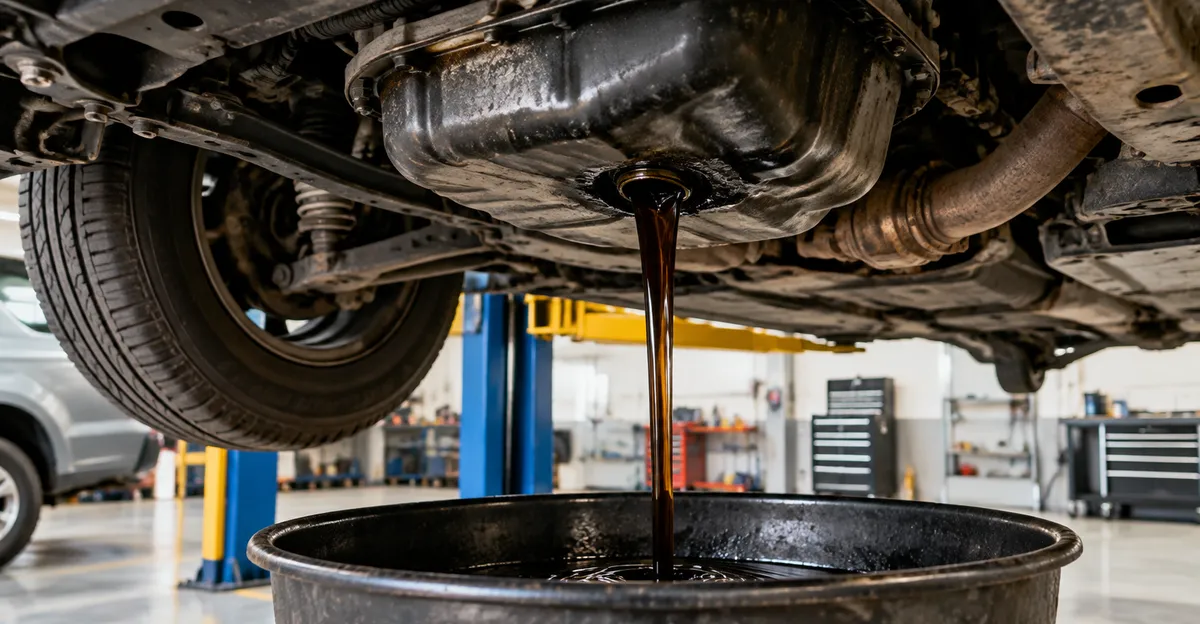
Why Do Cars Need An Oil Change
Why do cars need an oil change starts with what fresh oil is paid to do. Chevron's technical write-up lists four jobs in plain language: lubricate, cool, clean, and protect moving parts from wear. It also says oil helps filter impurities and prevents corrosion and rust. Mobil's product FAQ expands the same list from the contamination side. Oil carries combustion byproducts away from pistons and cylinders. It handles small amounts of water that form as the engine heats and cools. It collects dirt and dust that enter through the air intake. It deals with acids formed when water meets those contaminants. Sometimes fuel dilution or a coolant leak adds more load than the oil was designed to carry for one drain interval.
Those jobs are not optional extras. Without a film of oil, bearings, cam lobes, and piston rings run metal to metal. Without flow, heat that coolant never reaches stays in the part that made it. Without detergents and dispersants, soot and varnish settle into sludge. Without alkalinity left in the additive package, acids etch metal. Fresh oil is a package deal. Used oil is the same package after the job has already been done for thousands of miles.
The reason you drain it is not that the oil "gets dirty and looks bad." Mobil is direct: motor oil breaks down over time, loses effectiveness, and can no longer properly protect the engine. As you drive, contamination rises. The filter removes particles as oil passes through it, but additives get used up and the base oil can oxidize or thicken. At that point the oil cannot do its job and must be changed. Chevron reaches the same conclusion from the neglect side: high temperature, pressure, and oxidation degrade oil; lost lubricity means friction and wear; acidity corrodes surfaces; sludge clogs passages until oil cannot reach every gallery.
So the short answer to the head question is mechanical, not ceremonial. You change the oil because the fluid that protects the engine is a consumable. The engine is not.
| What oil is doing | What used oil loses | First check if you skip it |
|---|---|---|
| Lubricating bearings and cams | Film strength and viscosity control | Unusual knock or tick after warm-up; see engine |
| Carrying heat away from parts coolant misses | Ability to flow and absorb heat | Rising temperature gauge or hot smell |
| Suspending soot and debris | Detergent and dispersant capacity | Thick, sticky deposits at the next drain |
| Neutralizing acids and limiting rust | Alkaline reserve | Corroded parts found during a tear-down |
| Sealing rings and controlling blow-by | Cleanliness and stability | Smoke, dilution, or rising consumption |
What Breaks Down Inside Used Oil
Oil does not fail in one step. It fails by chemistry and by dirt at the same time.
Oxidation is the primary chemical path. AAA's engine-oil research report states that oxidation of the hydrocarbons in engine oil is started by oxygen and heat, and that transition metals in the engine can speed those reactions. The report calls oxidation the primary cause of oil degradation: harmful species form, service life shortens, and the machinery the oil is meant to protect can be damaged. Antioxidants in the additive package slow that process. As those additives do their jobs, they deplete. AAA lists additive-package depletion, along with base-oil deterioration, as a key reason oil change intervals exist.
Contamination is the parallel path. Mobil names combustion byproducts, water, dirt, dust, acids, and occasional fuel or coolant leaks. The filter catches some solids. It does not restore depleted additives. It does not undo oxidation. Chevron describes what happens when contamination wins: oil thickens, flows less well, cools less well, and can cook into sludge. Sludge is a thick, sticky gel that can clog oil passages and starve parts of oil. Chevron calls the end state irreparable damage or a very costly repair. Toyota's warranty and maintenance language is equally blunt about oil starvation and oil gelling: severe engine damage from skipping oil and filter service is not covered by the new-vehicle limited warranty.
Viscosity drift matters to the driver even when the word "viscosity" never appears on a dashboard. Mobil explains viscosity as resistance to flow. Oil must stay thin enough to pump on a cold morning and thick enough to keep metal surfaces apart when the engine is hot. Multigrade oils were invented because a single grade cannot do both. As oil oxidizes and loads with soot, that balance shifts. The oil that still "looks like oil" on the dipstick may no longer match the grade the engine was designed around.
Fuel dilution and coolant mixing are special cases, not normal aging. Mobil says water from normal breathing and combustion is often burned off if you drive long enough for the oil to get hot. A coolant leak from a bad gasket or a cracked part is a different problem: enough moisture to sludge the oil and cut power. Chevron treats cloudy or milky oil as a reason to service soon. That is not an oil-change reminder. That is a leak investigation.
How Often: Manual, Monitor, and the 3,000-Mile Habit
The interval question is where old advice and modern engines collide.
AAA says it used to be standard to change oil every 3,000 miles, but oil blends and engine design have moved most recommendations into a 5,000 to 7,500 mile band. Changing oil too often will not hurt the car, AAA notes, but it will hurt the budget. Not changing it often enough can hurt both. Toyota's consumer tip page repeats the same arc: the traditional every-3,000-miles-or-three-months rule has given way to 5,000 to 7,500 miles on many cars, and some can stretch toward 15,000 miles with the right oil and schedule. Those numbers are examples of what the industry publishes, not a universal sticker for your VIN.
The controlling document is still the owner's manual, and on many late-model cars the oil-life monitoring system. AAA describes older cars as mileage-based, with separate normal and severe schedules. Newer cars often drop the printed "severe" table because the monitor shortens the interval when it sees hard use. When the oil is changed, the technician must reset that monitor. If nobody resets it, the car will lie to you about remaining life.
Toyota's support article on synthetic intervals shows how specific the factory math can be. Some Toyotas that require 0W-20 synthetic list 10,000 miles or 12 months, whichever comes first. Other models where 0W-20 is only an option still sit on a 5,000 mile or 6 month schedule even if you pour synthetic. Special operating conditions such as dirt roads, towing, repeated short trips under 32°F, or extensive idling push oil and filter replacement to 5,000 mile intervals regardless of oil type. That is one OEM's rule set. Your brand may use different miles and months. The useful lesson is the structure: type of oil, model calibration, and how you drive all change the answer.
AAA's conventional, blend, and full-synthetic ranges are useful as a map, not as a substitute for the manual. Conventional often needs more frequent changes because it breaks down faster; AAA cites a general every-5,000-mile figure for that class. Synthetic holds up longer and may support longer drains, sometimes in a 10,000 to 15,000 mile conversation, while blends sit in the middle. The wrong move is buying a premium bottle and then inventing a longer interval the manufacturer never approved. The right move is matching the viscosity grade and the performance category the manual names, then draining on the schedule that manual or the monitor sets.
AAA also warns that oil-life indicators help but are not always perfect, and that you should still defer to the maintenance schedule. Chevron says the same thing in different words: check the owner's manual and follow the service minder if the car has one. Those systems watch how hard you drive and adjust frequency.
Cost is part of the decision for US owners, but it is not a license to stretch. AAA puts a typical oil change between about $20 and $100 depending on where you go and which oil you buy, with DIY averaging about $40 before you account for proper used-oil disposal. Those are national ballparks, not a quote for your ZIP code or your turbo four-cylinder. Paying for the change is still cheaper than paying for an engine that lost oil pressure.
Short Trips, Towing, and Other Hard Miles
Why do cars need oil change intervals that shrink for "easy" city driving is a question about temperature, not about toughness. Short trips look gentle. Chemically, they are hard on oil.
AAA lists primarily short trips of five miles or less among severe-service conditions, along with extreme heat or cold, dusty climates, sustained stop-and-go driving, and towing or heavy loads. Stop-and-go traffic keeps the oil from holding a steady temperature, which speeds degradation. Towing and heavy loads heat the oil harder. Highway miles that keep the oil at a stable operating temperature are easier on the fluid. Chevron's interval guidance names the same pattern: short drives, severe weather, heavy loads, and stop-and-start traffic call for more frequent changes than long highway runs in moderate weather.
Consumer Reports' maintenance reporting lands on the same short-trip problem from the moisture side. If you make lots of short trips, standard motor oil may never get warm enough to burn off moisture and impurities, which means it may not be doing enough to protect the engine. Mobil makes the same point about water from condensation and combustion: you generally do not worry about that path if you drive enough to burn the water off. A week of two-mile errands in winter does the opposite. The oil never stays hot. Water and fuel traces stay in the sump. Acids form. The next cold start still has to pump that mix.
Toyota's "special operating conditions" language is a practical checklist for US drivers even if you do not own a Toyota: off-road or dirt roads, towing, repeated short trips in freezing weather, extensive idling. Those conditions pull the interval down. Dusty roads load the oil and the filter faster. Idling puts hours on the oil without putting miles on the odometer, which is why a pure mileage sticker can lie.
If your day looks like school drop-off, a grocery run, and a cold start after work, do not congratulate yourself for "low miles." Tell the shop that pattern. AAA recommends telling the technician how you drive so the change frequency matches the real load. On a car with an oil-life monitor, those short trips are exactly the data the algorithm is trying to catch. On a car with a printed severe schedule, use the severe column even if a friend with highway miles changes oil half as often.
Oil Level, Color, Smell, and Warning Lights
An oil change interval assumes the sump still has oil in it. That assumption fails often enough that every serious guide repeats the level check.
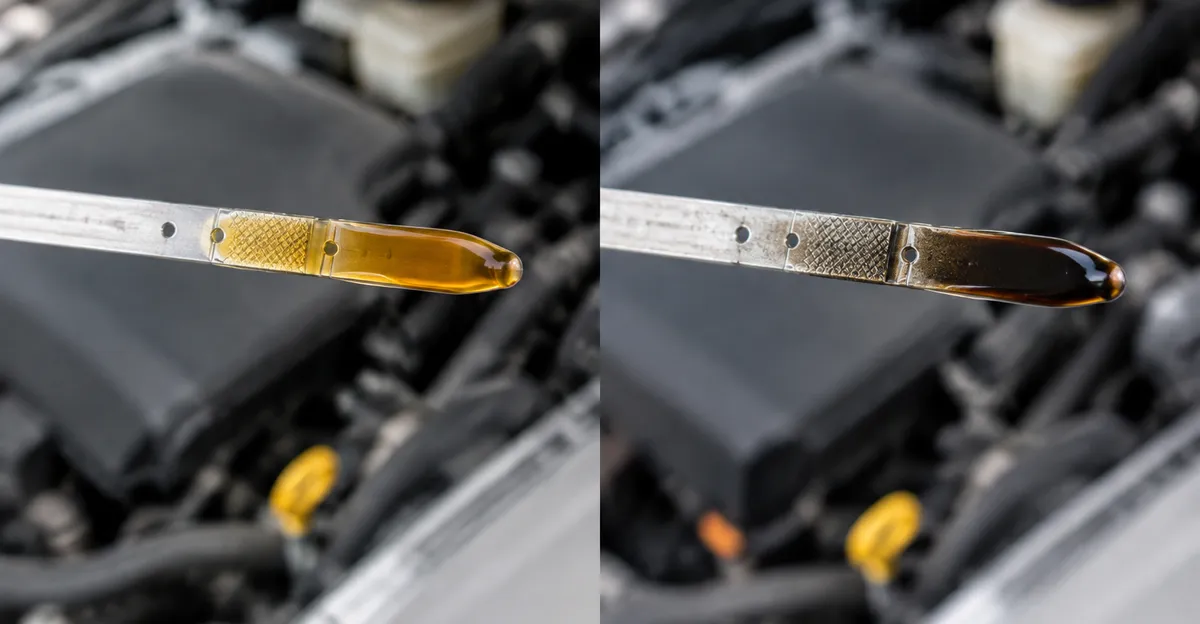
AAA recommends checking oil about once a month and walking through the dipstick steps: level ground, engine off, wipe, reinsert, read between the marks, add half a quart at a time if low. Mobil prefers checking before startup or five to ten minutes after shutdown so the oil has drained back to the pan. Chevron notes that some newer cars need more top-offs between changes, and that color is a clue but not the only one. Good oil is often a clear brown-black. Cloudy or milky oil needs service soon.
Toyota lists the overdue signs drivers actually notice: dark and dirty oil, knocking or unusual engine noise, excessive exhaust smoke, a burnt oil smell in the cabin, and a sudden drop in fuel economy. Chevron and AAA both connect degraded oil to lower efficiency because the engine works harder. A burnt smell or smoke is not a coupon for an oil change and a shrug. It can mean a leak onto a hot manifold, burning oil past rings or valve seals, or an overheating problem that needs a real diagnosis.
Dashboard language splits into two different emergencies. The oil-pressure or oil-can warning light is not a maintenance reminder. Mobil says that light can mean low level, a failing pump, a bad sensor, a blockage, foaming, or more, and that you should shut the engine down as soon as it is safe. Continuing to run with low oil pressure can destroy the engine. The maintenance or oil-life message is different. AAA says that when the oil-life indicator illuminates, schedule a change soon to prevent damage. That is a service appointment, not a pull-over-now event, unless the pressure light is also on or the level is empty on the stick.
| Signal | Likely meaning | First action |
|---|---|---|
| Oil pressure / oil can light | Low pressure or low level now | Stop safely, shut off, check level; do not keep driving |
| Oil-life or maintenance message | Calculated drain interval reached | Schedule service; reset only after the change |
| Dipstick below the low mark | Consumption, leak, or overdue top-off | Add the correct grade; find why it is low |
| Milky or frothy oil | Water or coolant in the oil | Service soon; treat as a leak, not a color preference |
| Dark but translucent oil | Often normal detergent work | Still follow the interval; do not extend on color alone |
| Burnt smell or blue smoke | Leak or burning oil | Inspect before the next long trip |
Do not reset an oil-life monitor to silence a warning without draining the oil. The monitor is a clock and a severity calculator. Resetting it without a change restarts the clock on used oil. If you change the oil yourself, reset it after the drain. If a quick-lube shop forgets, ask them to finish the job before you leave. A car that says 80 percent life left on 8,000-mile-old oil is not protecting you.
If You're Overdue, Low, or Burning Oil Between Changes
Readers who land on this page are often already late. The useful question is how late, and what the car is doing while you decide.
AAA says going a little past the interval is not an automatic failure, but going an extended time without a change can lead toward engine failure. If the oil-life light is on, schedule the change. If it has been over a year, or well beyond the recommended miles, treat that as catch-up, not as a debate. Chevron's neglect list is the reason: sludge, overheating, wear, and efficiency loss stack up. Toyota's warranty text is the money reason: oil starvation and gelling damage may land outside warranty coverage when oil and filter service were skipped.
Mobil's guidance for switching a neglected or high-mileage engine onto a strong synthetic is a useful model for any overdue car, even if you stay on the same oil brand. In a dirty engine, fresh oil will start cleaning deposits. That cleaning loads the new oil harder. Mobil suggests shortened early intervals after the switch, then a return to the normal drain. The same logic applies after a long skip: one overdue change is necessary, and a shorter follow-up drain is cheap insurance while the sump clears suspended junk. Do not stretch the next interval to "make up" for the money you just spent.
Low oil between changes is a separate branch. Topping off to the correct mark is the first aid. Finding why the level fell is the real job. Consumption through rings or valve seals, an external leak, or a PCV problem can empty a sump long before the calendar says change. AAA warns that a level that drops too low can cause damage a new-car warranty will not cover. Check monthly. If you add a quart every thousand miles, bring that fact to the shop with the oil change. An oil change alone does not fix a leak.
Milky oil, coolant loss, and unexplained white exhaust belong on a tow or a same-day appointment, not on a "next weekend" list. Mobil and Chevron both separate normal moisture that burns off from coolant intrusion. If the stick looks like a milkshake, stop treating it like a color preference.
Keep receipts. AAA notes that skipping the manufacturer's schedule can void warranty coverage for related failures. US dealers and manufacturers often ask for dated invoices with mileage, oil grade, and filter. A folder in the glove box or a scan in your phone is part of the maintenance, not bureaucracy.
Choosing Oil and Filter Without Guessing
The bottle on the shelf is a matching problem, not a brand loyalty test.
AAA says the oil must meet the SAE viscosity grade and the performance standards the vehicle calls for, commonly API, ILSAC, and in some cases ACEA. The shop can confirm the spec, but the manual is still the source. Mobil's viscosity FAQ is the reason that matching matters: the cold "W" grade covers cold cranking and pumpability; the second number covers hot operating viscosity. A thicker oil is not automatically safer. Engine clearances, fuel economy calibrations, and oil-pump design assume a grade. Pouring a heavier oil because a relative did it in 1998 can slow cold-start flow on a modern engine.
Synthetic versus conventional is a durability and interval discussion, not a religion. AAA describes synthetic as engineered to break down more slowly, form less sludge, and handle temperature extremes better, which is why it suits severe service and many late-model engines. Consumer Reports' reporting similarly points drivers who tow, haul, or live with hard winters and summers toward synthetic, while still insisting you respect the manufacturer's time limit even when miles are low. You can usually switch from conventional to synthetic at a normal change. Mobil says mixing is generally compatible but not a good habit, and that a neglected engine may need shortened early intervals after a synthetic switch while deposits clean up.
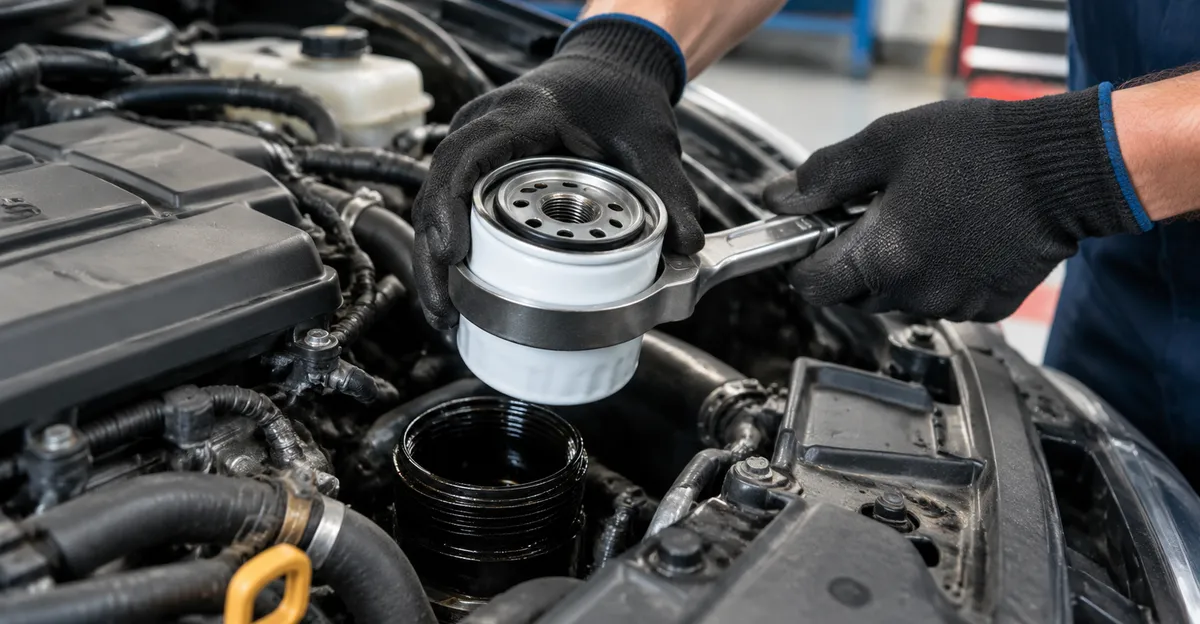
Change the filter with the oil. AAA says most manufacturers want a new filter at every oil change. A fresh sump with a clogged filter is a half-done job. Use a filter that meets the vehicle maker's requirements. Cheap media that collapses or bypasses early puts dirty oil back in circulation.
After the fill, start the engine, watch for leaks, shut down, and recheck the level. Toyota's DIY overview matches what every shop does: circulate, inspect, top to the mark, dispose of used oil and filters through a recycler, parts store, or municipal program. Dumping oil on the ground or in household trash is illegal in most US jurisdictions and a fast way to turn a $40 job into an environmental problem.
If you are choosing a shop, AAA's checklist is practical: certifications, oil and filters that meet manufacturer recommendations, clear warranty language, and honest resets of the oil-life system. Dealership versus independent is less important than whether the invoice lists the correct viscosity and specification. For related electrical or charging questions that show up during the same visit, the battery page covers testing habits that often ride along with oil-change inspections.
What to Tell the Shop
Leave with a short script, not a parts catalog.
- Miles and months since the last oil and filter change, and whether the oil-life monitor was reset.
- How you drive: short trips, highway, towing, idle time, dusty roads, extreme heat or cold.
- Whether you have been adding oil between changes, and how much.
- Any pressure light, maintenance message, burnt smell, knock, or smoke.
- The viscosity and specification the manual requires, if you know it.
That list lets a technician pick the schedule and the oil without guessing from the odometer alone. It also keeps you from buying an early engine repair because the last change was "whenever the sticker said 3,000 miles" on a car that was designed for a longer, monitored drain.
Oil changes exist because oil is a working fluid with a limited life. Heat, oxygen, fuel, water, dirt, and depleted additives turn that fluid into something that no longer lubricates, cools, or cleans the way the engine needs. Follow the manual or the monitor. Check the level between drains. Treat the pressure light as a stop. Treat milky oil as a leak. When you are overdue, change it, then tighten the next interval until the sump is clean again. That is the whole decision, from the first search query to the next sticker on the windshield.