
By Automotive Research TeamUpdated 2026-09-22
Why Do People Register Cars in Montana
Why do people register cars in Montana? In most Google results, the short answer is money and paperwork friction: Montana has no general sales tax, light-vehicle registration fees scale with the age of the car rather than the sticker price, and the state does not run the annual emissions and safety inspection programs many coastal and urban drivers know well. Expensive cars, motorhomes, and collector vehicles show up in the conversation because a few percentage points of tax on a six-figure purchase is a large check. This page is general educational information for United States vehicle owners. It is not tax, legal, or insurance advice for your purchase, and it does not tell you how to evade another state’s rules.
The pattern people usually mean is not a Montana resident renewing plates at the county treasurer. It is an out-of-state buyer who forms a Montana limited liability company, titles the vehicle in that LLC’s name, and receives Montana plates, then keeps the car where they already live. Montana filings can be lawful. The fight, when there is one, is almost always with the state where the car sleeps at night.
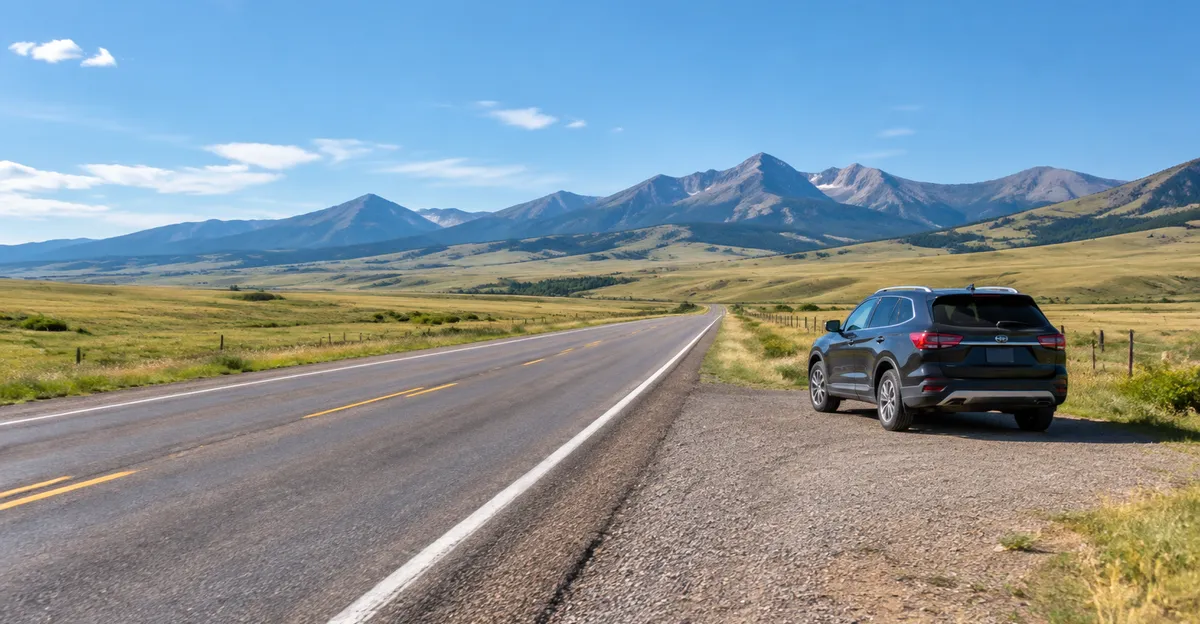
Why Montana Looks Attractive on Paper
Start with the tax line that every ranking explainer repeats. The Montana Department of Revenue’s sales tax guidance states that Montana does not have a general-use sales tax. That is the foundation. In a state that does charge sales or use tax on vehicles, a $100,000 purchase can mean thousands of dollars at the register or at registration. In Montana, that statewide retail sales tax does not apply to the car purchase the same way. Narrow charges still exist. Montana’s Department of Revenue separately describes a rental-vehicle sales and use tax on short-term rentals. Lodging-related taxes also exist. Those are not the same as a general retail tax on buying a car you will own.
Next is the registration math. Montana Motor Vehicle Division’s light-vehicle page explains that passenger cars, light pickups, vans, and SUVs can use 12-month, 24-month, or, for qualifying older vehicles, permanent registration. The registration rate is based on the age of the vehicle: subtract the model year from the calendar year for which the fee is due. MVD’s own example is a 2011 Chevrolet registered in 2018, treated as seven years old, with a registration rate of $87 plus a three percent administrative fee. Counties may add a county option tax tied to a depreciated manufacturer’s suggested retail price. That is not “free registration.” It is a different fee design than states that charge a percentage of the purchase price or a high flat fee on expensive cars.
Permanent registration is the third draw for people who keep cars a long time. MVD states that the owner of a light vehicle 11 years old or older may permanently register the vehicle so it does not need renewal as long as ownership is unchanged, with an additional payment of five times the local option motor vehicle tax or flat fee under the statute MVD cites. Specialty plates that need yearly recertification or donations can block permanent registration. If ownership changes later, the permanent deal does not travel forever as a free pass for the next owner without a new process.
Emissions and inspection rules are the fourth draw, especially for older collector cars and some RVs. Montana does not impose the kind of statewide smog and safety lane that California and several other states require. LegalClarity and other consumer explainers list that inspection gap next to the tax savings as a reason collectors look at Montana plates. For a reader, the practical point is narrower: Montana’s lack of a statewide inspection program does not cancel the inspection or registration duty in the state where you actually garage the car.
| Situation | Common motivation | First check |
|---|---|---|
| High purchase price in a sales-tax state | Avoid a large sales or use tax bill | Your home state’s use-tax rules for out-of-state purchases |
| Luxury or collector car that fails home-state emissions | Avoid smog or safety lanes | Whether your home state still requires local registration |
| Older daily driver kept for years | Age-based fees and possible permanent registration | Montana MVD age bands and county option tax |
| Full-time RV travel with no fixed home garage | Need a registration home for a mobile household | Whether any state can still claim habitual situs |
| Real Montana resident buying locally | Ordinary title and plates where you live | County treasurer in the county of residence |
That table is the floor shared by consumer explainers: no general sales tax, cheaper age-based fees, fewer inspections, LLC paperwork for nonresidents. The original problem for a careful buyer starts on the next line: registration state and use state are not the same thing.
How the Montana LLC Route Usually Works
LegalClarity’s explanation of the so-called Montana LLC loophole matches what most commercial registration services advertise. A person who lives in another state forms a Montana LLC, appoints a Montana registered agent with a physical address in the state, titles the vehicle in the LLC’s name, and applies for Montana plates. The buyer may never visit Montana. The LLC is a separate legal person under Montana law and can hold title to a car, boat, RV, or aircraft the way any business can.
Montana Secretary of State filing fees for forming an LLC are modest compared with a large sales tax. LegalClarity cites a $35 Articles of Organization filing fee, optional expedite fees, a free annual report if filed before the April 15 deadline, and a late fee if that report is late. Registered-agent services and “we handle title and plates” packages add hundreds to more than a thousand dollars a year in practice. Those costs are still small next to tax on a $200,000 sports car in a six-percent state, which is why the pitch exists.
Titling is paperwork, not magic. New vehicles need the manufacturer’s certificate of origin assigned to the LLC. Used vehicles need the existing title assigned to the LLC, not to you personally. Montana’s title application is Form MV1. The LLC’s legal name and Montana registered address must match the state’s records. The packet goes to the county treasurer for the county tied to that registered agent. Plates and the title arrive by mail when processing finishes.
None of that paragraph answers the question your home DMV or tax agency will ask: where does this vehicle habitually rest? Montana MVD’s light-vehicle instructions tell owners to renew during the month on the plates at the county treasurer’s office in the county they reside in. That sentence is written for people whose residence and registration county line up. An LLC with a rented mailbox address and a car parked in another state is the structure that triggers other states’ use-tax and fraud programs.
Use Tax Is the Part Sales Tax Avoidance Does Not Cancel
Sales tax is charged at purchase in many states. Use tax is the companion levy on tangible property bought elsewhere and then used inside the taxing state. For vehicles, the rate is often the same as the sales tax rate. Beancount’s 2026 guide on Montana LLC registration puts the failure mode in one line: if the truck lives in California, Texas, or Florida, the home state assesses use tax on first use in-state, and the Montana registration becomes evidence in the file.
Registration is not situs. The LLC may own the truck. The tax situs for use tax is where the vehicle is habitually garaged and used. Insurance declarations, toll accounts, parking tickets, dealership delivery addresses, and neighbor complaints all place a car more reliably than a Montana plate on the bumper. Beancount describes a common three-point match: out-of-state plates, a claim that no sales tax was due at purchase, and a home-state insurance address.
California publishes the sharpest consumer-facing numbers. In CDTFA news release 26-02, the California Department of Tax and Fee Administration and the DMV describe investigations into the “Montana Loophole”: buyers create out-of-state LLCs to register high-end automobiles and avoid California taxes and registration fees. CDTFA says it has identified close to 500 California dealers involved in more than 2,500 sales since 2023 to customers claiming to use the vehicle in Montana, costing the state more than $10 million a year in lost tax revenue. CDTFA reports more than 400 investigations into high-end purchasers and nearly 300 dealer audits tied to sales into no-tax states including Montana. The DMV reports 81 criminal investigations since June 2023, 601 fraudulently registered vehicles identified, and $2.3 million recovered in registration and taxes.
CDTFA’s release also states the substantive California rule in plain language: under state law, residents owe California sales tax on vehicles that are not first used and kept out of state for at least 12 months. Buyers who use the Montana structure and fraudulently claim the vehicle is used outside California can face a penalty of 50 percent of the tax on the purchase price. CDTFA letter L-966 to dealers adds that when a sale is made without tax to an out-of-state LLC with California-resident members, the customer may still owe use tax if the vehicle is brought into California within 12 months, and that registering outside California for the purpose of evading tax can trigger that 50 percent penalty. Keep records if you truly keep a car out of state. Do not invent a paper trail.
Other states are not identical to California. Utah, Illinois, Missouri, Georgia, and others have been described in legal explainers as tightening look-through rules, data sharing, or penalties around out-of-state plates. Treat those as a warning that enforcement is spreading, then read your own state’s statute and agency guidance. Never assume California’s 12-month window is the law everywhere.
Insurance, Garaging Address, and Claim Risk
Tax is half the story. Insurance is the half that can erase the savings in one denied claim. A personal auto policy is usually written for a named person who owns the car. An LLC-owned car may need a commercial auto policy, or at least an endorsement that names the LLC correctly. Many carriers will not write a personal policy for a vehicle titled only to an LLC. Some will write a commercial policy and then underwrite hard when the “business” has one car, no employees, and a garaging ZIP code in another state.
Garaging address drives price. Insurers price theft, weather, and crash frequency from where the car sits overnight, not from the state printed on the plate. If you tell the insurer the car is garaged in Montana and it lives in a dense suburb elsewhere, you have a misrepresentation problem. If you tell the truth about the home-state garage while the title and plates say Montana, underwriting may refuse the risk or demand proof that the registration is lawful where you drive.
After a crash, that mismatch can matter more than the unpaid tax. Adjusters compare the declarations page, the police report address, the repair shop location, and the registration. A denied claim on an expensive car or a damaged front bumper repair cycle can cost more than the sales tax you hoped to avoid. Photograph damage the same way you would after any collision: corners of the car, the plate area without posting private documents online, and any lights or wheels that took the hit. Then call the insurer that actually covers the car, not the one you wish covered it.
Montana also verifies insurance for vehicles it registers. Montana MVD publishes insurance-verification information for Montana-registered vehicles. Out-of-state drivers still owe whatever financial-responsibility rules apply where they drive. Plates do not float above local compulsory insurance law.
What Home States Look For
Enforcement is no longer a rumor shared only in exotic-car forums. CDTFA’s December 2024 warning to California dealers, described in release 26-02, told dealers they can be liable when shipping and delivery documents are missing or false. CDTFA also uses detailed vehicle sales reports from DMV to find dealerships assisting false out-of-state registrations. The top California cities CDTFA lists for these sales skew toward luxury-dealer corridors: Beverly Hills, Costa Mesa, Van Nuys, San Diego, and others. That list is about dealer volume, not a tourist guide.
Practical signals that invite a letter from a tax or motor vehicle agency include:
- Montana plates on a car that never leaves your home driveway for long trips.
- Insurance mailed to your home-state address while the registration address is a Montana agent.
- Toll tags, parking citations, or HOV camera hits that place the car in your state most days.
- A dealer file that shows the car was delivered to your home-state driveway while the sale paperwork claimed Montana use.
- Social media posts of the car at your house, your office, or your kid’s school lot.
None of those signals is a courtroom verdict by itself. Together they are how agencies build a use-tax and registration case. If you already have Montana plates and you live elsewhere, do not wait for a letter to learn your state’s amnesty, voluntary disclosure, or late-registration rules. Ask your state tax agency how to report a vehicle use tax you may owe. Ask the local DMV or equivalent how to title and register a vehicle that will be kept in the state. A lawyer or enrolled agent who works vehicle use tax in that state is worth the fee when the car is expensive.
Criminal cases exist. California DMV’s criminal investigations in the CDTFA release are one example. Most ordinary drivers will meet civil tax bills, registration fees, penalties, and interest first. Still treat “everyone does it” as marketing, not a defense.
When Montana Registration Is Ordinary
Plenty of people register cars in Montana for the boring reason: they live there. Montana MVD’s process for light vehicles is written for owners who renew at the county treasurer in the county of residence, choose a 12-month or 24-month period, and pay the age-based rate plus any county option tax. Permanent registration for qualifying vehicles 11 years and older is a real convenience for long-term owners who will not change title soon. VIN inspections, dealer paperwork, and “new-to-me vehicle” checklists on the MVD site are the ordinary path.
Assets that truly stay based in Montana are a second low-drama category. A boat kept at a Montana marina, an aircraft based at a Montana field, or a car that spends its life on a Montana ranch is using the registration state as the use state. Full-time RV travelers who do not maintain a fixed home garage are often cited as people with a stronger factual story than a suburban daily driver. Even then, states disagree about domicile, voting address, and where a traveler “resides.” Do not assume a full-timer postcard address solves every other state’s claim.
Military moves, temporary college housing, and genuine relocating workers create short windows where a car was bought in one state and then moved. Those stories need dated records: leases, orders, campground receipts, repair invoices, and insurance changes. California’s CDTFA consumer materials emphasize keeping proof of out-of-state use during the first months after purchase when you claim the car was not purchased for California use. Other states have their own proof standards. Invented receipts are worse than no strategy.
Questions to Ask Before You Buy or Re-Title
If a dealer, friend, or registration service pitches Montana plates, slow down and ask questions that force a yes-or-no answer.
- Where will this vehicle spend most nights in the next 12 months?
- Which state’s use tax, if any, applies when a resident buys out of state and brings the car home?
- Will the insurer name the LLC, and which ZIP code will be the garaging address on the declarations page?
- Who is liable if the home state later assesses tax: you, the LLC, the dealer, or all of you?
- What delivery and shipping documents will exist if a tax auditor asks where the car was first used?
- What happens to permanent Montana registration if you sell the car or move the title to your own name later?
- Are you being sold a Montana LLC package, or are you actually establishing Montana residency? Those are different claims.
A dealer who shrugs at use tax is not protecting you. CDTFA’s dealer letters exist because dealers can be pulled into the tax when delivery facts do not match exemption paperwork. A service that only files Montana paperwork is not your tax counsel in California, Texas, New York, or anywhere else.
For crash and ownership paperwork elsewhere on this site, start from the bumper guides when the question is damage after a collision, and from the engine guides when the question is mechanical failure. Registration strategy is a tax and motor-vehicle compliance problem first.

FAQ
Why do people register their cars in Montana?
They are usually chasing a lower tax and fee bill, or fewer inspection hurdles, than their home state offers on a high-value vehicle. Montana’s lack of a general sales tax and its age-based light-vehicle fees are the stated attractions. The LLC title is the tool nonresidents use to get Montana plates without living there. The open risk is home-state use tax and registration enforcement when the car never really leaves home.
Does forming the LLC make the tax go away?
No. The LLC can hold title in Montana. Use tax follows habitual use. California’s CDTFA release treats the common scheme as paper registration in Montana while the car is primarily used in California. Other states apply their own use-tax codes. An LLC without real separate business substance can also be ignored by a court or tax agency that looks through the form.
What records should I keep if the car truly stays out of my home state?
Keep purchase contracts, shipping bills of lading, out-of-state registration, fuel and service receipts, lodging or storage invoices, and insurance documents that show the garaging address. California consumer notices tied to out-of-state delivery forms tell buyers to keep proof of place of use, especially in the first 12 months, and note that the agency may have years to review. Your state may differ. Ask that agency how long to keep records.
What if I already have Montana plates on a car that lives at home?
Treat it as a compliance cleanup, not a forum argument. Contact your state tax agency about use tax and your motor vehicle agency about local registration. Get advice from a professional licensed where you live before you mail a voluntary payment or a protest. Ignoring a letter rarely improves the outcome once penalties and interest run.
Bottom Line for US Drivers
People register cars in Montana because Montana does not levy a general sales tax, charges light-vehicle fees by age, offers permanent registration for qualifying older vehicles, and does not run the inspection regimes many other states require. Out-of-state buyers often wrap that package in a Montana LLC. Those Montana steps can be valid Montana filings. They do not rewrite the use-tax and registration laws of the state where the car actually lives. California’s CDTFA and DMV crackdown shows how expensive the mismatch can become when agencies cross-check dealer sales, delivery facts, and local use. If you live in Montana, register there through the county treasurer like any other resident. If you live elsewhere, read your home state’s vehicle use-tax rules before you buy the pitch. When the numbers matter, talk to a tax professional or attorney in that state, not to a plate brochure.