
By Automotive Research TeamUpdated 2026-09-21
How to Open a Car Door Locked: Latch or Lockout
How to open a car door locked is a sorting job before it is an entry job. The key can be on the seat. You can have no key at all. The latch can be holding the striker while the lock is already open. The lock can be dead while the latch is fine. Those four are not the same repair, and they are not the same phone call.
You should leave with the first check for the situation you are actually in, and with a short list of what to say when someone arrives. Nothing below is a way to force a door. Measurements and labor times that appear here are copied from the bulletin that printed them, and they apply to the cars that bulletin names. If your car is not on that list, the number is an example of how a manufacturer decides, not a specification for your latch.
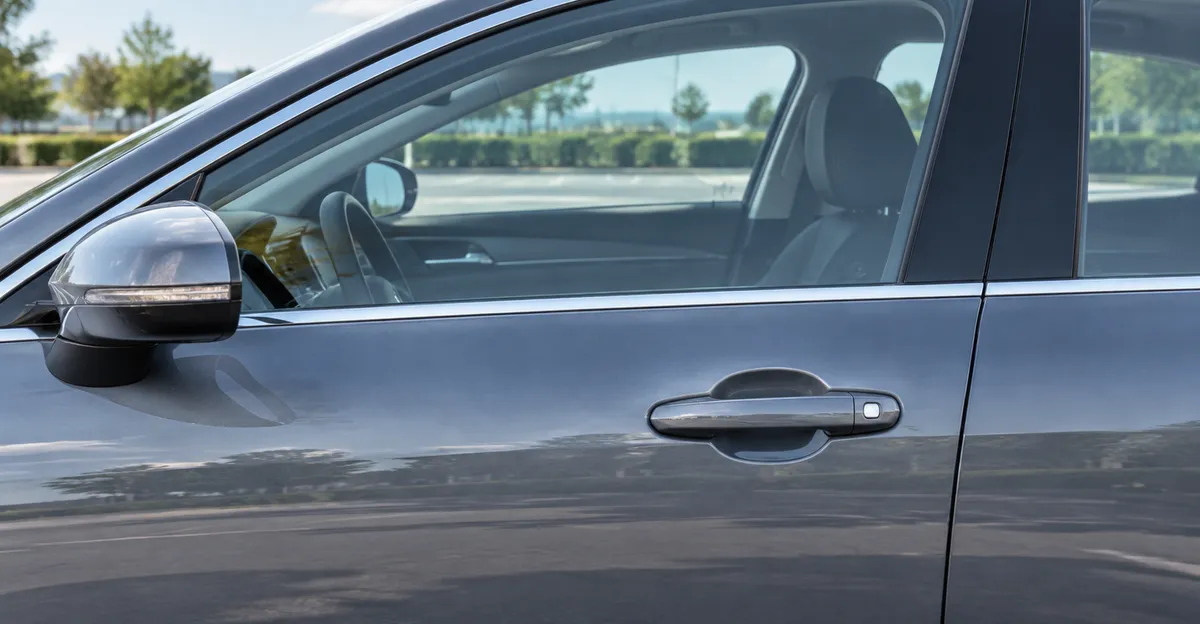
How to Open Car Door When Locked Out
Start with who is inside the car, then with what you can see, then with a call. Bryan Rodriguez, manager of fleet operations for AAA Club-owned Fleet Marin, told AAA's Via magazine that drivers sometimes arrive and find another door unlocked or a window down. Panic skips that walk. The walk is the first check because it is free and because it has ended real lockouts before a truck was dispatched.
AAA Via, published March 10, 2025, put a number on how often this happens. Ten percent of all calls for AAA roadside service in 2024 were vehicle lockouts. In 2021 the share was 11.9 percent. Keyless cars cut the rate: lockouts dropped from 13 percent for cars manufactured in 2007 to below 10 percent for cars manufactured in or after 2017. The rate fell. It did not hit zero.
Use the split in this table before you name a part or a tool.
| What you can see | Likely cause | First check |
|---|---|---|
| Key visible inside, other doors locked | The car locked with the key in it | Walk every door and window, then a spare or the maker's app |
| No key on you, and none in the car | A lost key, not a broken latch | Roadside only if a key is inside; otherwise a locksmith who can program a key |
| Rear door opens from outside, not from inside | Child lock, or the inside handle cable | The child-lock lever on the door edge, with the door open from outside |
| Neither handle opens the door | Latch, rod, or cable, not a missing key | Tell the shop which handle is dead. Do not approve a latch yet |
| That door is silent while the others click | Lock actuator, fuse, or wiring | Listen at the door, then the car battery and the fob |
| Outside handle feels slack, inside handle opens it | Release cable, not the lock | Say which handle works. A cable can stick without a dead motor |
A child or an animal in the car is not the same row as a key on the seat. AAA says police are unlikely to respond to a plain lockout, because of liability and because they are not locksmiths. If a child or an animal is locked in, AAA says they are likely to respond, and that they may break a window to get in. Extreme weather makes that call urgent. Do not spend the wait inventing an entry method. Call emergency services and stay at the car.
AAA also records what happens when an owner tries the glass. Rodriguez described a Honda Civic with an infant inside. The owner wrapped a shirt around one hand and hit the rear passenger window three times. The glass did not break. Rodriguez then opened the car. Breaking a window can damage the paint, fill the cabin with glass, and leave you with an open hole until the glass is replaced. AAA says it can be considered only in an emergency, when a child or an animal is inside, the weather is extreme, and no other help is available, and that the window should be one far from the person or animal. That is a last resort for a life in the car. It is a bad first move for a key on the seat.
If nobody is trapped, the order AAA prints is short. Walk the car. Check every door and every window, especially on a keyless car. If you have the manufacturer's app, try it. AAA notes that you may be able to install the app on the spot and unlock remotely, and that these services often charge a subscription. Then think about a spare at home or with a friend. AAA says getting that spare is often faster than a truck or a locksmith, and that a friend can send it by rideshare. A magnetic box stuck under the car is a poor version of that spare. AAA says a thief can find the box, and that salt and road shock can knock it off without you noticing.
When the walk, the app, and the spare are all no, call roadside assistance. AAA Via says most roadside policies cover a vehicle lockout, and that AAA does. The person they send can often open the car without a separate locksmith. AAA's own lockout page says the service is 24 hours, that a technician unlocks the vehicle, and that if they cannot, they tow it or you hire a locksmith and request reimbursement. Towing distance depends on the membership. On that page, lockout service counts as one of four roadside events a year.
The published request number on the page is 800-222-4357. The same page says a non-member can buy a Classic membership by phone and pay a $75 fee for immediate help, and that a membership bought online waits 48 hours before emergency roadside assistance starts. Prices printed there for the plans themselves are $64.99, $99.99, and $124.99 a year. Those figures are what that AAA page listed. They are not a quote for every club, and they are not a quote for a shop.
Some SUVs and luxury cars are the exception AAA names. Roadside may not be able to open them. The next step is a locksmith, or a tow to the dealer. Rodriguez's standard for the locksmith is specific: bonded, licensed, and insured, so an untrained attempt does not damage the car.
AAA Via also names the tricks people try alone, including a shoelace, a coat hanger, and a slim jim. It says those methods can damage the car or the lock and often fail when an amateur tries them. This page does not describe them. The damage is the reason. A bent linkage is how a lockout becomes a latch repair.
How to Open a Locked Car Door with Keys Inside
The key is in the car. That fact decides the job. You are not missing a key blank, and you are not looking at a latch that failed on the highway. You are outside a car that shut with the key on the wrong side of the glass.
Keyless cars are built to stop this, and they still do it. AAA says a keyless-start vehicle is typically designed so it will not lock all the doors if the key is still inside. AAA then lists the ways that design loses: a dead key fob, a dead car battery, or a failure in the electronic locking system. Any of those can stop the car from recognizing that the key never left. The fob can be in the cup holder, the battery in the fob can be flat, and the car will behave as if you walked away with it.
That is why the 2017-and-newer drop in AAA's lockout share is not a promise. Newer cars lock the key in less often. A fob that has been warning you, or a car that has been sitting until the battery is low, can still lock. AAA's prevention line is to replace the fob battery as soon as it shows signs of dying, and not to leave the key at home just because an app exists. The app is a backup. It is not the key.
If the key is inside and a door or a window is already open, you do not have a lockout. Rodriguez's crews find that case. Use it. If everything is shut, the manufacturer's app is the next non-destructive try, including an app you install while you are standing there, if the maker allows it and you can sign in. A subscription wall is common. Hit it once. Then stop.
A spare that is not in the car beats a stranger with tools. AAA's practical version is a spare left with someone you trust, who can bring it or send it. Locking the car with the key after you are already out, instead of with the interior switch, is the habit AAA pairs with that spare. So is clipping the key where you can see it before you shut the door. None of that opens the door you are standing at. It is how the next one stays a non-event.
When the spare is not close, roadside is the call AAA puts next. The technician's job, on AAA's description, is to unlock a car whose keys were left inside. That is a narrower job than cutting a new key. If the technician cannot open it, the same membership that covers the attempt covers a tow, within the mileage on your plan, or a locksmith bill up to the reimbursement on that plan. On the Mountain West AAA lockout page those caps are $50 for Classic, vehicle only; $100 for Plus, vehicle only; and $150 for Premier, vehicle and home. Premier is the only one of those three that the page extends to a house. A car is on all three.
One member note on that page is worth keeping if the key is in the trunk rather than on the seat. The trunk would not open without a key, so the technician drove the member home for a spare, then back. A trunk that has no exterior release is not a door you lean on. Say "the only key is in the trunk" when you call. It changes whether anyone tries the trunk lid.
How to Unlock a Car Door with Keys Inside
Unlocking, in this situation, means moving the lock to open while the latch is still a working latch. You are not repairing the catch that holds the door to the striker. You are asking a trained person to do the thing the fob would have done if the car had seen the key.
Listen while you lock and unlock from the app or from a second fob, if you have one. A click or a short whir from the problem door means the actuator received a command. Silence from that door, with the other doors clicking, means this may no longer be "the key is on the seat." It may be a dead actuator or a connector, which is the lock section below. A click from every door, and a key you can see through the glass, is still a lockout. Call it that.
AAA's line on amateur tools applies here with the key in plain sight. The coat hanger and the slim jim are how people turn a visible key into a bent rod. The key is not worth the linkage. Wait for the truck, or go get the spare.
After you are in, make the spare real. AAA's list is ordinary and enough: keep the key where you can see it before you leave the seat, lock with the key from outside, clip it to a bag or a belt loop, leave a spare with a person rather than in a magnetic box, set up the app without treating the app as the only key, and change the fob battery at the first sign it is dying. The motivation AAA names is the wait and the bill you just paid. Use it once.
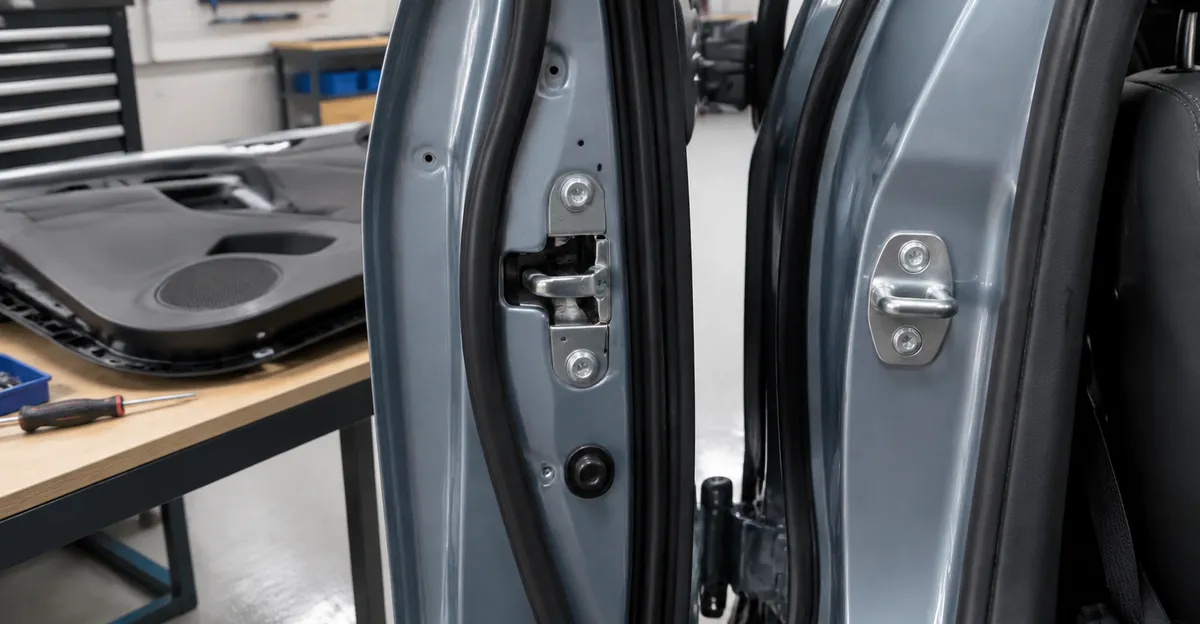
How to Open Car Door Without Key
No key in the car is a different problem from a key you can see. Roadside lockout service, as AAA defines it on the lockout page, is for keys left inside. The technician helps you regain a key that is already yours. If that key does not exist, opening the door only gets you into a car you still cannot start, and it may not be what the membership is for.
Read the split on the same page. AAA says it provides lockout service, not locksmith service. A locksmith's list, in AAA's words, can include opening the door, programming a transponder key, a smart key, or a fob so it matches the car's security system, cutting or duplicating a key, ignition repair, and pulling a key that has broken off in the lock. Those last items are why "I have no key" is not solved by the same person who pops a lock for a key on the seat. Programming syncs a key to the immobilizer. A latch does not do that. A new outside handle does not do that.
For some vehicles AAA already says the roadside technician cannot get in, and the path is a locksmith or a tow to the dealer. A car with no key at all belongs in that sentence even when the door would have been easy. The dealer or the locksmith has to put a key into the car's security system. Towing a locked car to the place that can program the key is sometimes the whole job. Say you have no key, not that you locked the key in, if that is the truth. The wrong sentence sends a technician who is not equipped to cut and program.
Rodriguez's check still applies, and it matters more when the person will be making a key: bonded, licensed, and insured. An untrained opening can damage the lock. A wrong key blank can waste the programming attempt. You want one shop that can do both the door and the key, or a dealer that can. You do not want a second repair created by the first attempt.
If a key is merely lost and a spare exists somewhere else, go back to the spare. AAA's hierarchy does not change because the search phrase says "without key." A spare in a drawer is a key. Use it. The without-key path is for when there is nothing to fetch.
How to Unlock Car Door Without Key
Treat "unlock" as access, and treat a new key as a second decision you make on purpose. Access without a key you own is what roadside or a locksmith sells. A key the car will accept is programming, which AAA places with the locksmith, not with the roadside technician.
If the door is unlocked in the mechanical sense and the handles still do nothing, you are not in this section. An unlocked door that will not open is a latch, a rod, or a cable. Paying for a key does not move a seized latch. Ask one question before you hire anyone: if the lock knob is already up, does either handle open the door? If the answer is no, skip the key and read the latch section.
If the door is simply locked and you have no key, the money question is the reimbursement cap, not a guess at a parts price. AAA's page is explicit that lockout service itself is included with membership, and that a third-party locksmith is reimbursed only up to the plan amount: $50, $100, or $150 on the three plans named there. A programming job can cost more than that cap. Know the cap before you authorize the locksmith, and ask what is an unlock versus what is a new key. Those are different lines on the bill.
A broken key in the cylinder is also on AAA's locksmith list, as extraction. It is not a cue to keep turning the stub. Say the blade snapped, and let the locksmith remove it. Forcing the stub is how a cylinder becomes the next part.
Fix Car Door Latch
A latch is the mechanism that grabs the striker on the body and lets go when a handle pulls a rod or a cable. The lock decides whether that pull is allowed. A door can be unlocked and still not open, because the handle is no longer connected to the latch, or because the latch itself is bound. Fixing the latch means finding which of those it is. It does not mean ordering the latch because the door failed.
General Motors said this in writing. Bulletin PI0011C, revised May 2013, covers 2014 and prior GM passenger cars and trucks, and it excludes the Corvette, the XLR, the CTS coupe, the CTS-V coupe, and the DTS. Customers reported a door that would not open from the inside or the outside handle, a door that would not unlock from the fob or the interior switch, a door that would not unlock from the inside lock knob, and a door that would not unlock from the key cylinder. GM's note under that list is the sentence to take to the shop: latches are often replaced for these conditions, and the bad part is often not the cause. Follow the bulletin in order.
GM names four causes that mimic a bad latch. The first is preload. The outside handle rod was clipped to the latch while the outside handle release lever was not in the full-up position, hard against its stop. The latch then does not operate correctly. The second is effort at the inside lock knob. Resistance in that travel can keep the latch from unlocking. The third is a rod or a cable that is not fully attached. If the clip on the outside handle rod is not secure, the clip comes off and the outside handle does nothing. The fourth is the electrical connector at the latch. If it is not fully seated, power locks, the door-ajar signal, and other electrical features on that door can fail together. A dark door-ajar icon on the warning-lights page is a reason to mention the connector, not a reason to buy an actuator on sight.
The preliminary checks GM lists are the ones that do not require a door panel on the ground. Look at both handles for debris, missing pieces, and loose mounts. Cycle the inside lock knob by hand and feel for smooth, low effort. On some newer designs the inside handle unlocks the door, so there may be no separate knob to pull. Compare how far the knob travels by hand with how far it travels on the power switch. High effort, or a power stroke that is shorter than the hand stroke, means a bind in the lock rod. On a rear door whose inside handle does nothing, confirm the child security feature is not engaged. GM puts that check before any disassembly.
Only after those checks does the bulletin go inside the door, and GM prints that the bulletin is for a professional technician, not a do-it-yourselfer. The steps that matter for your estimate are the decision points, not a Saturday teardown. The technician is told to disengage the trim without hanging it from the handle cable or the harness. They watch whether the lever on the latch moves when the inside handle is pulled, and whether the cable is kinked. They push the harness connector down to be sure it is seated. They confirm the key-cylinder rod is on the pawl and on the latch. They unclip the outside handle rod, put the lever full up against the stop, and reclip it with a new clip while holding a slight upward pressure on the rod. They unbolt the latch, leave it plugged in, and run the power locks. If the lock lever then travels fully and the latch works, GM says do not replace the latch. Reassemble so the bind or the bad attachment is gone. Replace the latch only when every earlier step is done and the latch still fails.
That order is the repair. A shop that quotes a latch before anyone has cycled the knob and checked the child lock is quoting the part GM says is often innocent. Ask which of the four causes they ruled out. If they cannot name one, the diagnosis has not started.
The child lock is the cleanest of those splits, and it is easy to misread as a failed latch. Sure Lock & Key describes the mechanical version as a lever that unhooks the interior handle from the latch. The handle still moves. It is no longer attached to the piece that opens the door. The exterior handle is on its own connection, which is why it usually still works. If the outside handle opens the door and the inside handle does not, Sure Lock & Key says the fault is almost always the child lock or the inside handle's connection. If neither handle works, they say the child lock is not the primary cause and the main latch is. GM's preliminary step matches that: on a rear door, verify the child feature is off before you go further.
A lever that looks off can still be stuck on. Chevrolet bulletin 16-NA-273, September 2016, is the narrow case: 2016 and 2017 Chevrolet Volt, North America and Korea. Owners said the rear door handle would not open the door. GM lists a child-lock mechanism stuck in either position, inside handle cables not seated, outside handle cables not seated, and a latch cable abutment not seated. The correction line is blunt. If the rear handles will not open the doors because the child-safety latch switch is stuck, do not replace the door latches until the cables have been inspected. The cables have to be seated at the inside handle, at the outside handle, and at the latch, and the abutment sleeves have to be in their mounts. The cables have to be free of kinks and fraying. Then the technician checks child-lock on and off from inside and from outside. If the cables are fine, GM sends the technician to the service information, not to a parts counter. The bulletin's labor operation for that cable inspection and repair, left or right, is 1.2 hours, operation 2080718, and GM marks it as a bulletin-only time. It is not a price, and it is not your car unless it is one of those Volts.
PI0011C has its own bulletin-only times for a smaller job: 0.4 hour for a front outside-handle rod adjustment, operation 2080008, and 0.4 hour for the rear, operation 2080018. If the latch or the lock is actually replaced, GM says to use the normal labor operation for that replacement, not these bulletin codes. Bring the times only as proof that GM expected a rod adjustment to be a short diagnostic repair, not as a bid for your invoice.
Audi published a different latch-side failure that feels like a lock. Technical Service Bulletin 2029151/4, dated March 27, 2013, covers certain 2010 through 2013 Audi models, including TT, TT RS, allroad, A4, A5, RS 5, A6, A7, Q5, and A8, with VIN cutoffs that differ by model. The complaint is specific. The door will not open from the outside handle. It will open from the inside handle. The owner often locked the car and pulled the outside handle to confirm it was locked. The next time, the outside handle feels slack and does not open the door.
Audi's cause is the Bowden cable from the mounting bar to the door lock. The cable can be kinked during installation, which raises friction inside the cable. The lock stays in the pressed position or does not return to its zero position. A twist can distort the rubber grommets and do the same thing. The correction is to replace the cable. The carrier, which Audi calls the bow, stays unless it is damaged. The bulletin tells the technician not to separate the cable from the carrier while the carrier is still in the car, and not to twist the cable afterward. Turning the lock or the mounting bar is how the new cable gets twisted. The cable part number in the bulletin is 4H0837099B for front and rear on the listed vehicles, except the A8 rear, which uses 3W7837099A. Those numbers are for the cars in that bulletin. They are not a universal door cable.
The Audi pattern is the row in the table where the inside handle works and the outside handle is slack. A shop that sells a lock actuator for that complaint is selling a motor for a cable that is not returning. Ask them to say which handle works before they name the part.
Sure Lock & Key adds a practical warning about spray lubricant. They do not recommend spraying it into the latch. The film collects dust, and most of the child-lock failures they see are a broken or disconnected piece, not a dry pivot. A latch that needs a clip or a seated cable will not be repaired by a straw aimed at the keyhole.
Fix Car Door Lock
The lock is the part that allows or blocks the latch's release, by a knob, a cylinder, a switch, or an actuator. A lock repair is justified when the latch releases normally once the lock is out of the way, or when the actuator no longer drives the lock lever through its travel. It is not justified by a door that merely will not open.
GM's PI0011C list mixes lock complaints and latch complaints on purpose. Will not unlock with the fob, the switch, the knob, or the key cylinder can be preload, a binding knob, a loose rod, or a connector that is half plugged in. The bulletin's test, once the latch is unbolted and still connected, is whether the lock lever shows full travel when the switch is pressed. Full travel and a working latch means fix the bind or the attachment. Incomplete travel is the lock-side finding. Electrical diagnosis comes before a new actuator if the connector has no output when the switch is pressed. GM says to check for corrosion at that connector and to verify the switch actually sends power. A new lock on a dead wire is a repeat visit.
The door-ajar signal sits on that same connector. If power locks and the ajar warning failed together, say so. The fourth cause in the bulletin is exactly that combination. If the ajar warning is fine and only the mechanical handle is dead, the connector is a weaker suspect than the rod.
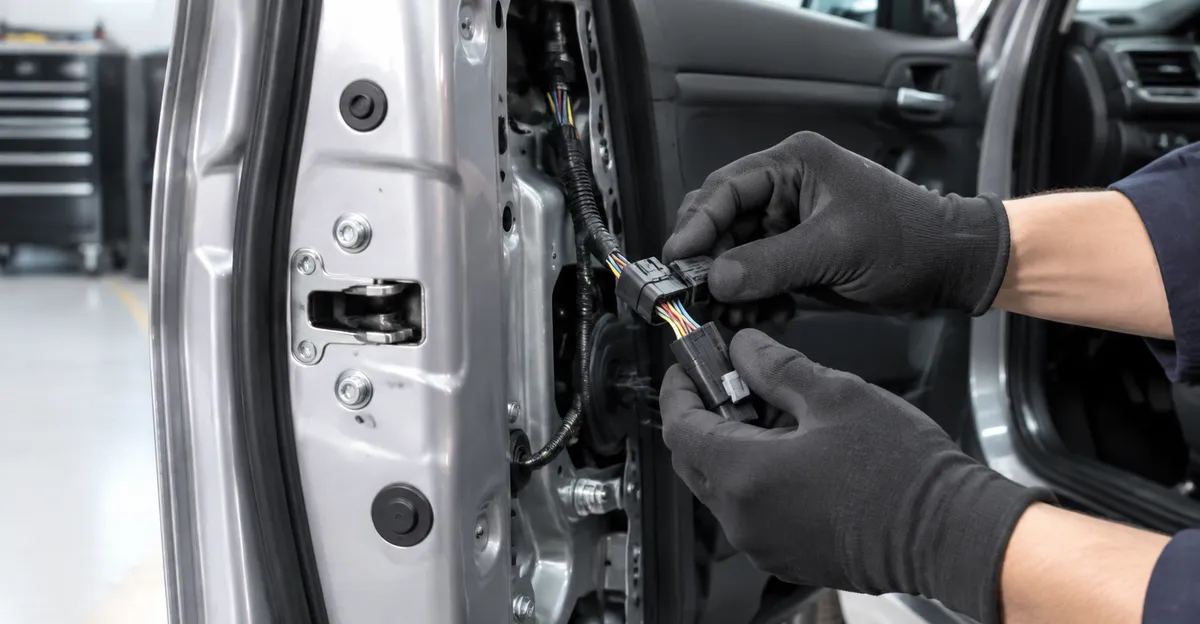
A single-model electrical case is BMW Service Information bulletin 51 31 19, dated October 2, 2019. It applies to the i8 coupe (I12) and the i8 roadster (I15). One or both doors will not open or close. BMW's cause is low voltage from the vehicle's 12-volt battery or from the key-fob battery, which can leave the door lock actuator temporarily faulted. The note under that cause matters: a voltage problem puts the door latches into a failsafe mode, and the failsafe has to be cleared after the voltage defect is repaired. Replacing the actuator first, with a low battery still in the car, does not follow the bulletin.
The check BMW prints is the status LED on the door release switch. A fault in the door lock system makes that LED flash more than twice. Two flashes or fewer means this bulletin does not apply, and the technician keeps looking. If a fault is stored in the body domain controller for the door locking system, the bulletin also does not apply; BMW sends the technician into ISTA. If the LED test says yes and the controller has no related fault, the next step is an energy diagnosis of the 12-volt system. Faults there are repaired before anyone continues. Then the fob batteries are checked in ISTA. Only after a real voltage defect is found does the bulletin reset the actuator: the technician removes the rear section of the front wheel-arch cover and disconnects the door isolating plug for 60 seconds, then tests the locks. If the doors work and no new faults appear, BMW says reassemble and stop. No further repair. If faults remain, replace the door lock actuator under the repair instruction BMW numbers REP 51 21 090. Key-fob battery replacement is called out separately from warranty repairs for a materials defect. The whole procedure is for those two i8 variants. It is not a reset ritual for a Civic or a pickup. What transfers is the order: prove the 12-volt supply and the fob before you condemn the actuator, because BMW had a failsafe that looked like a bad lock and was a low battery.
Sure Lock & Key's listening test is the version of that order you can do in a parking lot. Use the fob or the interior lock switch. A click or a whir at the problem door means the actuator got the signal, so a silent mechanical fault is more likely than a dead motor. Silence at that door, with the other doors answering, points at the actuator, a fuse, or the wiring. They note that electronic child locks on newer cars use a motor instead of a lever, and that a failed actuator, a sensor that thinks the door is ajar, or a software fault can ignore the button. An Audi Q8 child-lock fault code they cite, B122D29, is an example of a code a scan tool can see. It is not a code to assume on your car. The point of the example is that silence plus a stored code is an electrical diagnosis, and a scan tool belongs in the estimate before a latch assembly does.
AAA's locksmith list closes the lock section from the other direction. Key programming, key cutting, ignition repair, and broken-key extraction are locksmith or dealer work. They are not latch work. If the door opens once someone unlocks it, and the car still will not start with the key you have, the remaining job is the immobilizer and the key, not the striker. If the key turns and the knob will not follow, GM's bind check comes before a new cylinder. High effort on the knob is one of the four causes that make a latch look failed when the latch is not the failed part.
Do not approve "latch and actuator" as a pair because both words appeared on the estimate. Ask which test failed. A lever that travels fully with the latch unbolted is GM's reason not to replace the latch. An LED that flashes more than twice on an i8, after a low-battery repair, is BMW's reason to reset before replacing the actuator. A slack outside handle with a working inside handle is Audi's reason to replace a cable. Three tests, three parts. One door that will not open is not a reason to buy all three.
What to Tell Them Before They Touch the Door
The person on the phone, and the technician at the car, can only sort what you report. Have these answers ready. They are the same splits as the table, in the order a stranger needs them.
- Is a child or an animal inside? If yes, you should already be on with emergency services. Say it again to anyone else who arrives.
- Did you walk every door and window? Rodriguez's crews keep finding one that was never locked.
- Is the key inside, in the trunk, or gone? "Inside" is a roadside unlock. "Gone" is a key that has to be made. "Trunk" may mean the lid itself cannot be opened.
- Did the manufacturer's app connect, and did it unlock anything?
- Which door, and which handle? Outside only, inside only, or neither. Rear doors: is the child lock on?
- Does the lock knob move by hand the same distance it moves on the switch? A short power stroke is GM's bind clue.
- Do the other doors click when this one stays silent?
- Is a door-ajar warning on, off when it should be on, or paired with dead power locks?
- Did it start after a jump-start, a dead battery, or a fob that had been weak? On an i8 that history matters. On any car it is the fact the shop should hear before it orders a lock.
- Has anyone already pulled the trim or sprayed the latch? A panel hanging on its cable is the damage GM tells technicians not to create. Say so if it happened.
For a lockout, the call AAA publishes is 800-222-4357, or the online request on your club's roadside page. Have the membership handy. Lockout uses one of the four annual events on the plan described above. If you are hiring your own locksmith, ask for the reimbursement rules before you pay, and ask for a license you can check. Rodriguez's three words are the filter: bonded, licensed, insured.
For a door that is already open, or that opens from one side, you are past lockout and into the door itself. The estimate should name a failed test, not a popular part. A rod adjustment, a seated connector, a child lock that was on, or a kinked cable can all look like a latch from the curb. GM's instruction is to prove the latch is actually bad before it is replaced. Audi's instruction, on the cars in that bulletin, is to replace the cable when the outside handle is the only one that failed. BMW's instruction, on the i8, is to fix voltage and clear the failsafe before a new actuator.
Leave with the row you matched, not with a technique. A key on the seat is a call. No key is a programmed key. A handle that moves and does nothing is a cable, a rod, or a latch, inspected in that spirit. A door that stays silent while the others click is an electrical lock, after the battery and the fob. Forcing the door is how those rows get mixed together.
FAQ
How Can You Unlock a Car Door Without a Key
AAA defines roadside lockout service as help when the keys are already inside. The technician unlocks the car. If that fails, the car is towed or you hire a locksmith and claim the reimbursement on your plan. The Mountain West page caps that claim at $50, $100, or $150 depending on Classic, Plus, or Premier. Programming a transponder or cutting a new key is locksmith work, which AAA says it does not perform. Use a locksmith who is bonded, licensed, and insured. A child or an animal inside the car is an emergency call, not a routine unlock.
Will the Police Open the Car?
Not for a typical lockout. AAA says departments hesitate because of liability and because officers are not locksmiths. A child or an animal locked inside is the exception AAA names, and in that exception breaking a window is what AAA expects the responders to consider. For a key on the seat and an empty car, call roadside.
Should the Shop Replace the Latch First?
No. GM bulletin PI0011C says the latch is often replaced when a rod, a cable, a binding knob, or a loose connector is the cause. If the latch works after it is unbolted and the attachment is corrected, GM says not to replace it. Volt bulletin 16-NA-273 refuses a new rear latch until the handle cables are inspected. Ask which of those checks was done.
Can a Dead Fob Battery Lock the Key Inside?
Yes. AAA says keyless cars are designed not to lock every door with the key still inside, and that a dead fob, a dead car battery, or an electronic lock fault can defeat that design. On the BMW i8, bulletin 51 31 19 goes further: low voltage from the 12-volt battery or the fob can put the latches in a failsafe that has to be cleared after the voltage is fixed. Replace a weak fob battery when it first warns you. That is AAA's prevention step, and it is cheaper than a lockout.